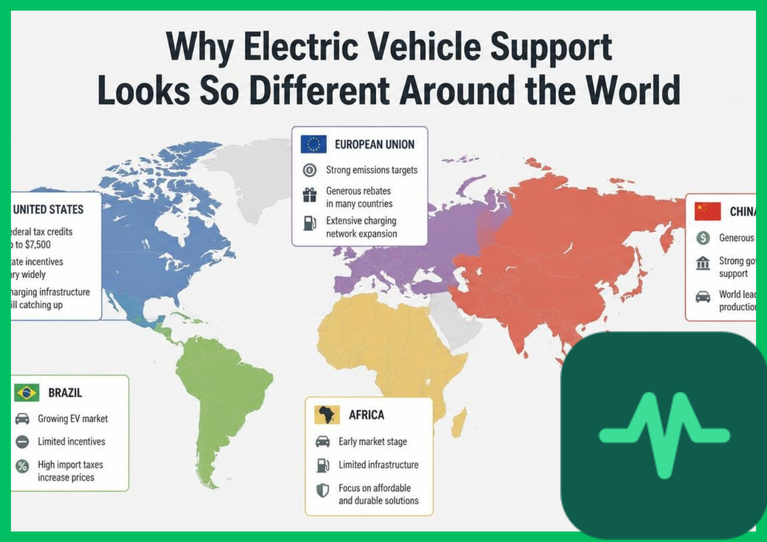
This isn't confusion or misinformation. It genuinely reflects how differently individual regions approach electric vehicle policy.
Why policy approaches genuinely differ so much
Each region faces its own distinct combination of economic priorities, existing energy infrastructure, domestic automotive industry considerations, and broader policy goals. These genuinely different starting points naturally lead to genuinely different policy approaches toward electric vehicles.
A region heavily dependent on imported oil might prioritize electric vehicle adoption specifically to reduce that energy dependence. A region with a significant domestic automotive manufacturing industry might shape policy partly around protecting or transitioning that existing industry. Neither underlying motivation is more legitimate than the other, they simply reflect genuinely different national circumstances.
The honest reality of shifting policy over time
Policy approaches don't just differ between regions, they also genuinely shift over time within the same region, sometimes considerably, as circumstances, priorities, and political leadership change.
Some regions have recently reduced certain electric vehicle support measures after years of stronger backing, while others have been expanding their support during this same general period. This creates a genuinely complex, constantly evolving global picture rather than one simple, static trend applying uniformly everywhere.
Why this variation isn't necessarily a problem
It's tempting to view policy variation as evidence that some regions are "getting it right" while others are "getting it wrong." The more honest, nuanced reality is that different circumstances genuinely warrant different approaches.
A densely populated region with limited domestic energy resources faces a fundamentally different set of considerations than a large, resource-rich region with an established automotive manufacturing base. Expecting identical policy approaches from such different starting points would genuinely be unrealistic.
What this means if you're considering an electric vehicle
Rather than assuming your own experience, or what you've read about another region's approach, universally applies to your specific situation, it's genuinely worth researching your own local, current circumstances directly.
Government incentive programs, available infrastructure support, and broader policy environment can change relatively quickly, meaning even recent information about a specific region can become outdated faster than you might expect.
The honest role of larger economic forces
Beyond specific government policy, broader economic factors also genuinely shape how attractive electric vehicles appear in different regions. Local fuel costs, electricity pricing, vehicle import costs, and overall economic conditions all factor into the genuine, practical calculation of whether an electric vehicle makes sense in any specific location.
This means even regions with genuinely similar formal policy approaches can see very different real-world electric vehicle adoption rates, simply due to these broader economic differences beyond policy alone.
Why global organizations track this variation closely
International energy organizations closely monitor and analyze this policy variation specifically because understanding these different approaches helps inform broader, more effective global strategies for expanding electric vehicle adoption where it genuinely makes sense for each region's specific circumstances.
This kind of comparative analysis helps different regions learn from each other's genuine successes and challenges, rather than each region working in complete isolation without benefit from others' accumulated experience.
What genuinely consistent trends exist despite this variation
Despite significant policy variation, certain broader trends do appear genuinely consistent across most regions globally. Electric vehicle technology continues improving. Battery costs continue trending downward over time. And overall global electric vehicle adoption continues growing, even while the specific pace and policy support driving that growth varies considerably by location.
This suggests that while policy specifics genuinely differ, the broader underlying trajectory toward increased electric vehicle adoption remains a genuinely global pattern, even if it doesn't unfold identically or simultaneously everywhere.
A more honest way to think about this variation
Rather than searching for one universal, "correct" approach to electric vehicle policy that should apply everywhere, it's more genuinely useful to understand policy as something inherently shaped by each region's specific, honest circumstances and priorities.
This perspective helps make sense of what might otherwise seem like confusing, even contradictory, information when comparing experiences and policy environments across different parts of the world.
Why staying informed about your own region matters most
Given this genuine variation, the most practically useful thing you can do is stay informed about your own specific region's current policy environment, rather than assuming general global trends or another region's specific experience directly applies to your own situation.
Local automotive dealers, government resources, and dedicated electric vehicle organizations in your specific area typically provide the most accurate, current information relevant to your actual circumstances.
The honest bottom line
Electric vehicle policy genuinely varies dramatically around the world, and that variation reflects real, legitimate differences in each region's circumstances, priorities, and economic considerations, rather than some regions simply being more enlightened or committed than others.
Understanding this honest complexity helps you interpret global EV news more accurately, and reminds you that your own local research remains considerably more valuable than assuming broader trends or other regions' experiences directly translate to your own specific situation.
Comments (0)
Login to leave a comment.
No comments yet. Be the first to share your thoughts!