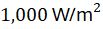
 solar irradiance at AM1.5G spectrum,
 [
 ]). This fundamental efficiency ceiling stems from spectral mismatch: photons with energies below the silicon bandgap (
 ) pass through unabsorbed, while high-energy ultraviolet and visible photons generate excess thermal energy via carrier relaxation (hot-carrier thermalization). Stacking a wide-bandgap metal halide perovskite top cell onto a crystalline silicon bottom cell captures complementary regions of the solar spectrum, elevating laboratory and industrial tandem efficiencies beyond 33% toward theoretical multi-junction limits exceeding 43%.
Bandgap Optimization and Spectrum Splitting Physics
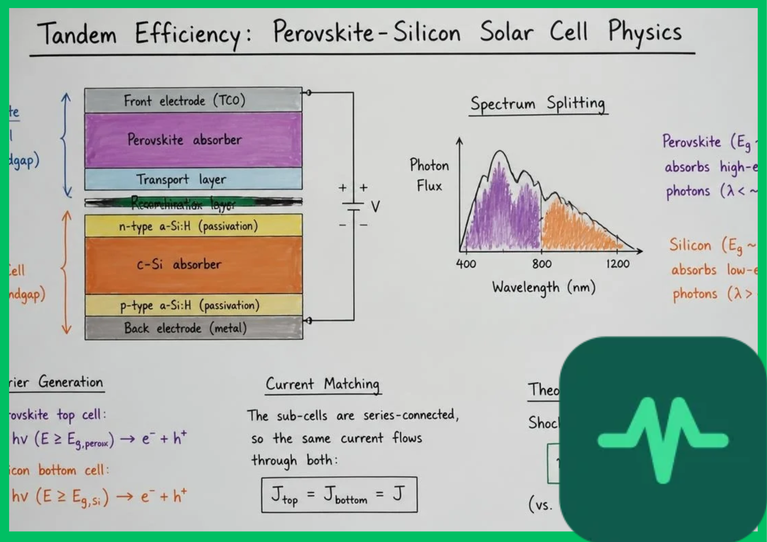
The thermodynamic advantage of a tandem photovoltaic architecture lies in optimizing light absorption spectrum utilization through bandgap engineering. Solar radiation spans a wide photon energy spectrum ranging from high-frequency ultraviolet to low-frequency infrared wavelengths. In a monolithic tandem configuration, the top perovskite cell absorbs high-energy photons in the ultraviolet and visible spectrum (wavelengths below  ), utilizing a tunable bandgap optimized between
 and
 .
Photons with energies lower than the perovskite bandgap—specifically near-infrared wavelengths extending from  to
 —pass transparently through the upper sub-cell without absorption losses. The underlying crystalline silicon bottom cell captures these transmitted infrared photons, utilizing its narrow bandgap (
 ) to generate supplementary electrical current. This dual-junction optical stacking minimizes thermalization losses, raising the theoretical conversion efficiency limit significantly above single-junction configurations.
Multi-Junction Photovoltaic Physics and Current Matching
Designing high-efficiency tandem devices requires resolving complex electrical coupling challenges between sub-cells, particularly in two-terminal (2T) monolithic configurations. In a 2T tandem structure, the perovskite top cell and silicon bottom cell are connected in series via an interlayer recombination junction or transparent conductive oxide (TCO) tunnel junction (such as indium tin oxide [ITO] or zinc oxide).
Because sub-cells are connected in series, current matching ( ) is mandatory. If the photocurrent generated by the perovskite top cell drops below the photocurrent of the silicon bottom cell due to spectral shifts or sub-optimal bandgap tuning, the overall current output of the tandem device is bottlenecked by the weaker sub-cell, degrading fill factor (
 ) and power conversion efficiency.
Alternatively, four-terminal (4T) tandem configurations decouple the electrical circuits of the top and bottom cells mechanically, eliminating current-matching constraints. However, 4T systems require independent inverters and complex transparent rear contacts, increasing manufacturing costs and optical parasitic absorption losses. Consequently, industrial research focuses heavily on monolithic 2T architectures utilizing advanced compositional engineering to achieve precise current matching under standard solar spectra.
Perovskite Crystal Chemistry and Material Stability
The active light-absorbing layer of the top sub-cell utilizes synthetic metal halide perovskites characterized by the general chemical formula  , where 'A' represents a monovalent organic or inorganic cation (such as formamidinium
 , methylammonium
 , or cesium
 ), 'B' denotes a divalent metal cation (lead
 or tin
 ), and 'X' represents a halide anion (iodide
 , bromide
 ).
These materials exhibit exceptional optoelectronic properties, including high optical absorption coefficients (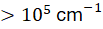 ), long charge-carrier diffusion lengths exceeding 1 micrometer, and high defect tolerance. However, commercializing perovskite-silicon tandem solar cells requires overcoming severe environmental instability hurdles:
- Moisture and Oxygen Degradation: Polar organic cations react hygroscopically with ambient moisture, causing irreversible phase segregation and crystal decomposition from the black perovskite phase (
 -phase) into yellow non-perovskite lead iodide (
 ).
- Thermal and Light-Induced Ion Migration: Under intense sunlight and elevated operating temperatures (
 to
 [
 to
 ]), halide ions migrate across the crystal lattice, causing localized bandgap shifts and efficiency degradation.
- Encapsulation Engineering: Implementing edge-seal barrier laminates and atomic layer deposition (ALD) aluminum oxide (
 ) passivation layers blocks moisture ingress and prevents volatile component outgassing during extended field operations.
Technical Data Specifications of Perovskite-Silicon Tandem Parameters
| Photovoltaic & Material Parameter | Engineering Specification Range |
|---|---|
| Perovskite Top Cell Bandgap |  to  tunable optical window |
| Crystalline Silicon Bottom Bandgap |  standard indirect bandgap |
| Certified Laboratory Efficiency (2T) | 29.5% to 33.9% total power conversion efficiency |
| Theoretical Tandem Efficiency Limit | 43% to 46% under AM1.5G concentrated spectrum |
| Perovskite Layer Thickness |  to  active semiconductor film |
Open-Circuit Voltage ( ) |  to  combined sub-cell potential |
| Thermal Degradation Threshold |  (  ) maximum operational limit |
Commercial Manufacturing and Scalability Challenges
Transitioning perovskite-silicon tandem solar cells from laboratory spin-coating scale ( ) to industrial gigawatt-scale production requires adopting scalable solution-processing and vacuum deposition techniques. Solution deposition methods—such as slot-die coating, air-knife assisted blade coating, and inkjet printing—enable rapid large-area film formation on textured silicon bottom cells.
Textured silicon bottom wafers, essential for minimizing front-surface optical reflection, complicate uniform perovskite deposition because liquid precursor solutions tend to pool in micro-pyramidal valleys, causing pinholes and electrical shunting. Engineering conformal coating protocols and utilizing multi-cation mixed-halide formulations ensures uniform crystal nucleation across rough silicon topography.
Accelerated indoor and outdoor durability testing under international standards (such as IEC 61215) confirms that passivated emitter and rear cell (PERC) and tunnel oxide passivated contact (TOPCon) silicon wafers integrated with chemically stabilized perovskite top layers achieve stable long-term energy yields with minimal degradation rates (<1% annual capacity loss).
The Final Take
Optimizing perovskite-silicon tandem solar cell efficiency redefines multi-junction photovoltaic physics by shattering single-junction Shockley-Queisser limits. Citing International Energy Agency technology assessments and academic materials research, bandgap tuning, current-matching precision, and scalable deposition engineering enable commercial modules to achieve power conversion efficiencies exceeding 30%. By capturing complementary solar spectra with high-performance metal halide perovskites, tandem architectures establish an indispensable technical foundation for next-generation solar energy generation.


Comments (0)
Login to leave a comment.
No comments yet. Be the first to share your thoughts!