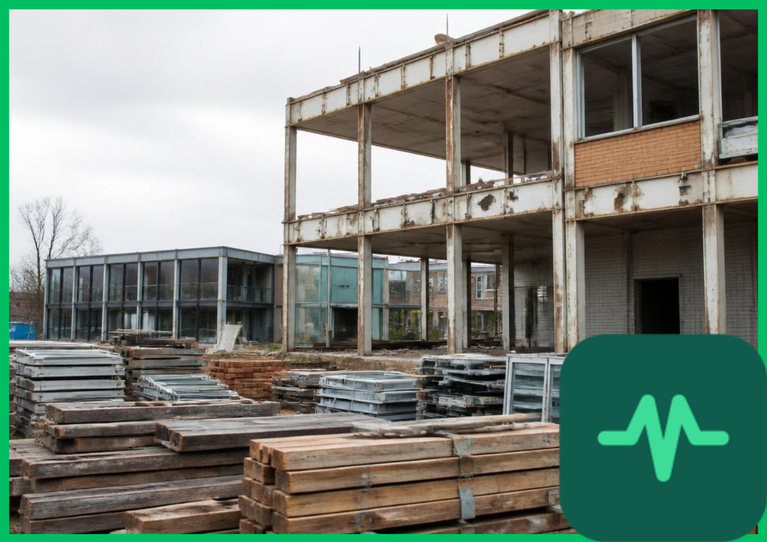
What cradle to cradle design actually means
This approach designs buildings so their materials can be separated and reused later, rather than permanently combined in ways that make recycling difficult or impossible.
Instead of gluing, welding, or permanently bonding everything together, materials get connected in ways that allow them to be taken apart cleanly when the building eventually reaches the end of its use.
Why this matters so much
Traditional construction often treats materials as permanent once installed. Concrete gets poured. Materials get bonded together in ways that make separating them later nearly impossible without damage.
This means even genuinely valuable materials, like quality wood or metal, often end up wasted simply because they were installed in a way that made future reuse impractical.
How this actually changes construction methods
Builders using this approach favor mechanical fasteners, like screws and bolts, over permanent adhesives and welds wherever practical. This allows components to be unscrewed and removed intact, rather than destroyed during removal.
Materials also get chosen partly based on how well they can be reused later, not just how well they perform during the building's initial use.
Why this represents a genuine shift in thinking
Traditional construction asks how to build something that lasts and performs well. This newer approach asks an additional question. What happens to these materials after this specific building is done with them.
This shifts focus from a single building's lifetime toward the materials' entire lifetime, potentially spanning multiple buildings across many decades.
The honest challenges this creates for builders
Designing for future disassembly often requires more upfront planning than traditional construction. Builders need to think ahead about how materials will eventually be separated, not just how they'll perform today.
This can add complexity and sometimes additional upfront cost, since it requires different techniques and often more careful design than simply building using the most familiar, conventional methods.
Why this approach connects to sustainable materials broadly
This idea works especially well alongside other sustainable materials, like reclaimed wood or recycled steel, since a genuinely circular system requires that materials can move easily between different buildings and different uses over time.
Without designing for disassembly, even the most sustainable materials risk becoming permanently locked into a single building, unable to fulfill their full potential for reuse elsewhere.
What this means for how long buildings actually last
This doesn't mean buildings need to be temporary or flimsy. A cradle to cradle building can be just as sturdy and long-lasting as a traditional one.
The difference shows up decades later, when the building eventually needs renovation or replacement. Instead of demolishing everything into waste, valuable materials can be carefully removed and given a genuine second life elsewhere.
Why this matters for reducing construction waste
Construction and demolition waste represents a significant portion of total global waste. Materials designed for eventual reuse directly address this problem at its actual source, rather than simply trying to manage waste after it's already been created.
This offers a genuinely more complete, upstream solution compared to focusing purely on recycling materials after a building has already been torn down.
Why more architects and builders are exploring this idea
As sustainability becomes a bigger part of how buildings get designed and evaluated, thinking about a building's entire future material lifecycle, not just its initial construction, has become a genuinely serious professional consideration.
This reflects a broader pattern across sustainable design generally, applying circular economy thinking, using everything more than once, to something as large and permanent-seeming as an entire building.
What this could look like in practice
Imagine a building reaching the end of its intended use decades from now. Instead of demolition crews and dump trucks, careful disassembly crews remove usable materials, which then get transported to become part of an entirely new building elsewhere.
This isn't a distant fantasy. Early examples of this approach already exist, though widespread adoption will likely take considerable time to become the genuine construction norm rather than a notable exception.
The bottom line
Cradle to cradle building design asks a genuinely important, often overlooked question. What happens to a building's materials after that particular building is finished being used.
By designing for future disassembly and reuse from the very beginning, this approach offers a real, practical path toward reducing construction waste significantly, one thoughtfully designed building at a time.

Comments (0)
Login to leave a comment.
No comments yet. Be the first to share your thoughts!