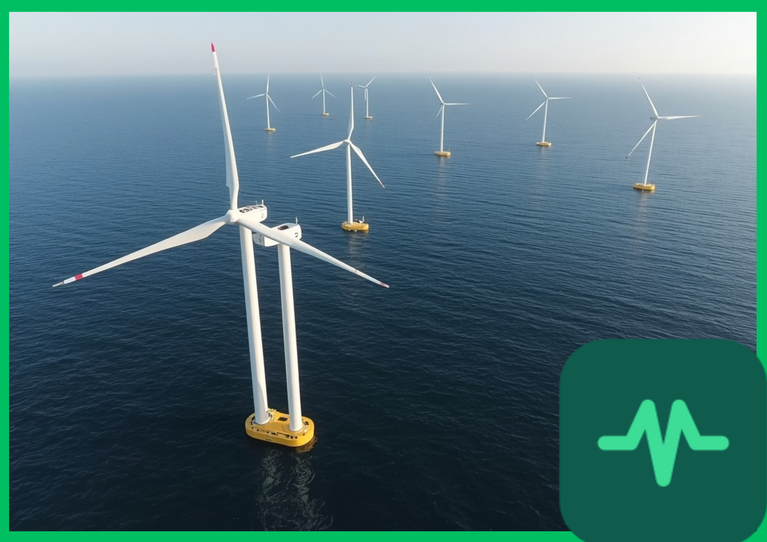
Floating wind turbines are changing this picture entirely, and the implications are genuinely significant for how much of the ocean can realistically contribute to wind energy generation.
Why traditional offshore wind has real limits
Conventional offshore wind turbines are fixed directly into the seafloor, which works well in relatively shallow coastal waters. But this approach becomes genuinely impractical, or prohibitively expensive, once water depth increases significantly.
This limitation has meant that vast areas of ocean, specifically the deeper waters found along many coastlines worldwide, have remained genuinely inaccessible for traditional offshore wind development, regardless of how strong and consistent the wind resources might be in those specific locations.
How floating wind turbines solve this problem
Rather than fixing the turbine directly to the seafloor, floating designs use a buoyant platform that stays anchored to the seabed through mooring lines and anchors, rather than a rigid, direct structural connection.
This fundamentally different approach means water depth becomes considerably less limiting, since the turbine platform floats on the surface regardless of how deep the water actually is below it, opening up genuinely vast new ocean areas previously considered impractical for wind development.
Why this expansion genuinely matters
Some of the world's strongest, most consistent offshore wind resources exist in deeper waters that traditional fixed-bottom turbines simply cannot economically access. Floating technology unlocks genuine access to these resources for the first time.
This represents a considerably larger potential wind energy resource than previously realistic estimates suggested, when calculations were necessarily limited to only the shallower coastal waters traditional turbines could access.
The honest technical challenges still being addressed
Floating wind technology, while genuinely promising, still faces real, honest engineering challenges. Ensuring stability in deeper, often rougher ocean conditions requires continued refinement of platform design and mooring systems.
Cost also remains a genuine, honest consideration. Floating platforms currently tend to cost more than traditional fixed-bottom alternatives, though this gap is expected to narrow as the technology matures and gains broader deployment experience, similar to patterns seen in other renewable energy technologies during their own earlier development stages.
Why standardization could meaningfully help
Industry analysis suggests that standardizing turbine and platform designs, along with establishing more predictable project development pipelines, could meaningfully reduce the average lifetime cost of electricity from offshore wind considerably over the coming decades.
This mirrors a common pattern across many energy technologies, where early projects tend to be genuinely more expensive and customized, while broader industry standardization and accumulated experience gradually drive costs down considerably over time.
The honest scale of current development
Floating offshore wind remains an earlier-stage technology compared to established, traditional offshore wind, though genuine commercial-scale projects have moved beyond pure research and into real, operational deployment in various locations globally.
Continued investment and development suggest this technology will likely play an increasingly significant role in overall offshore wind capacity over the coming years, complementing rather than necessarily replacing traditional fixed-bottom installations in shallower waters where that approach remains genuinely cost-effective.
What this means for regions with deep coastal waters
Regions previously considered unsuitable for meaningful offshore wind development, due to rapidly deepening coastal waters, now have genuine, realistic reasons to reconsider their offshore wind potential using floating technology instead.
This could meaningfully expand which regions globally can realistically pursue offshore wind as part of their broader clean energy strategy, rather than this technology remaining accessible only to areas with naturally shallow coastal waters extending far offshore.
Why continued innovation in this space matters
Beyond floating platforms specifically, broader innovation continues across wind turbine technology generally, including experimental approaches like airborne and bladeless wind systems that could eventually access locations poorly suited even to floating conventional turbines.
This ongoing innovation suggests wind energy's practical potential continues expanding meaningfully beyond what seemed realistic even a few years ago, as engineers continue finding creative solutions to previously limiting technical constraints.
A genuinely exciting frontier for wind energy
Floating offshore wind represents one of the more genuinely exciting developments in renewable energy technology currently, meaningfully expanding where wind energy can realistically be harvested, rather than simply improving efficiency within existing, already-accessible locations.
This kind of genuine expansion in accessible resources matters significantly for the broader, longer-term potential of wind energy as a meaningful contributor to global clean energy needs going forward.
The honest bottom line
Floating offshore wind technology is genuinely unlocking previously inaccessible deep ocean areas for wind energy development, representing meaningful, real expansion in wind energy's practical potential rather than simply incremental improvement to existing approaches.
Real, honest challenges around cost and engineering complexity remain, but continued investment and technological refinement suggest this technology will likely play an increasingly significant role in the broader clean energy transition happening globally in the years ahead.
Comments (0)
Login to leave a comment.
No comments yet. Be the first to share your thoughts!