
 transmittance), it exhibits a high thermal conductivity coefficient (
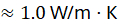 [
 ]) and lacks structural load-bearing ductility. Transparent wood composites resolve this performance trade-off by chemically removing light-absorbing lignin from natural wood substrates and impregnating the porous cellulose scaffold with refractive-index-matched polymers, achieving high optical transmittance alongside superior thermal insulation and impact resistance.
Chemical Delignification and Lignin Removal Mechanics
Natural wood is opaque due to light absorption and scattering caused by lignin—a complex cross-linked aromatic biopolymer that imparts brown color and rigid cellular structure—alongside hemicellulose and crystalline cellulose microfibrils. Fabricating transparent wood composites begins with chemical delignification of native wood veneers (such as balsa, birch, or yellow poplar) with thicknesses ranging from  to
 (
 ).
Chemical treatment typically involves submerging wood veneers in an aqueous sodium chlorite ( ) and acetic acid (
 ) buffer solution maintained at
 (
 ) for 6 to 12 hours. This oxidative delignification process selectively dissolves and extracts lignin macromolecules while preserving the parallel orientation of cellulose microfibril skeletons. The resulting delignified wood substrate appears as a porous, highly hydrophilic white matrix composed almost entirely of crystalline cellulose.
Polymer Impregnation and Refractive Index Matching
The delignified cellulose scaffold contains air-filled void spaces with a refractive index of  , whereas the cellulose skeleton possesses a refractive index of approximately
 . This refractive index mismatch causes intense light scattering at internal cell walls, rendering the delignified wood opaque. Achieving optical transparency requires impregnating the porous cellulose matrix with a transparent polymer whose refractive index matches that of cellulose (
 to
 ).
Industrial manufacturing processes utilize prepolymer resins—such as prepolymerized polymethyl methacrylate (PMMA), epoxy resins, or polyvinyl alcohol (PVA)—dissolved in volatile organic solvents or infiltrated via vacuum-assisted resin transfer. Following vacuum impregnation, thermal or ultraviolet curing polymerizes the resin inside the micro-channels of the wood template. Eliminating air pockets and matching refractive indices minimizes light scattering, enabling parallel light rays to transmit through the composite structure.
Optical Transmittance and Thermal Insulation Thermodynamics
Transparent wood composites deliver dual performance metrics that surpass conventional soda-lime glass: high optical transmittance combined with exceptionally low thermal conductivity. Optical transmittance ( ) reaches 85% to 90% across the visible light spectrum (
 to
 ) for composite thicknesses of
 (
 ). Furthermore, the oriented cellulose nanofibril structure scatters incoming solar radiation, diffusing natural daylight uniformly across interior building spaces and reducing glare while lowering artificial indoor lighting electrical loads.
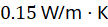
Thermodynamically, transparent wood exhibits a thermal conductivity ( ) ranging from
 to
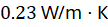 (
 ), which is four to six times lower than standard window glass. This low thermal conductivity stems from phonon scattering along the polymer-cellulose interfaces and the anisotropic cellular alignment of the wood skeleton. Deploying transparent wood glazing reduces conductive thermal heat loss through building envelopes by 30% to 50% in extreme climate zones.
Technical Data Specifications of Transparent Wood Parameters
| Optical & Thermal Parameter | Engineering Specification Range |
|---|---|
Optical Transmittance ( ) | 85% to 90% at  (  ) thickness |
Thermal Conductivity ( ) | 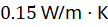 to 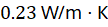 (  ) |
| Refractive Index Matching |  to  polymer-cellulose interface parity |
| Tensile Strength |  to  (  ) |
| Izod Impact Toughness |  to  (  ) |
Density ( ) |  to  (  ) |
| Haze (Light Scattering Factor) | 60% to 85% diffused daylight transmission |
Mechanical Strength, Impact Resistance, and Structural Integration
Unlike brittle soda-lime glass that shatters catastrophically under high mechanical impact or thermal shock, transparent wood composites exhibit high toughness and ductility. The cellulose microfibril scaffold acts as a natural fiber-reinforcement matrix, imparting tensile strengths ranging from  to
 (
 )—three to five times higher than conventional glass.
Izod impact toughness values exceed  to
 (
 ). When subjected to severe mechanical stress, transparent wood deforms plastically rather than fracturing into sharp shards, making it an ideal load-bearing structural glazing material for high-wind and seismic-prone building envelopes. Furthermore, integrating transparent wood composites into exterior fenestration systems reduces total structural deadweight, as composite densities range between
 and
 (
 ), significantly lower than glass.
The Final Take
Optimizing transparent wood composites window glazing efficiency transforms sustainable architectural engineering by replacing carbon-intensive soda-lime glass with bio-derived structural materials. Citing IEA energy efficiency assessments and UNEP sustainable materials research, chemical delignification and polymer refractive index matching enable high optical transmittance alongside low thermal conductivity. By combining structural load-bearing ductility, impact resistance, and superior thermal insulation, transparent wood composites establish an essential technical foundation for next-generation low-carbon building envelopes.


Comments (0)
Login to leave a comment.
No comments yet. Be the first to share your thoughts!