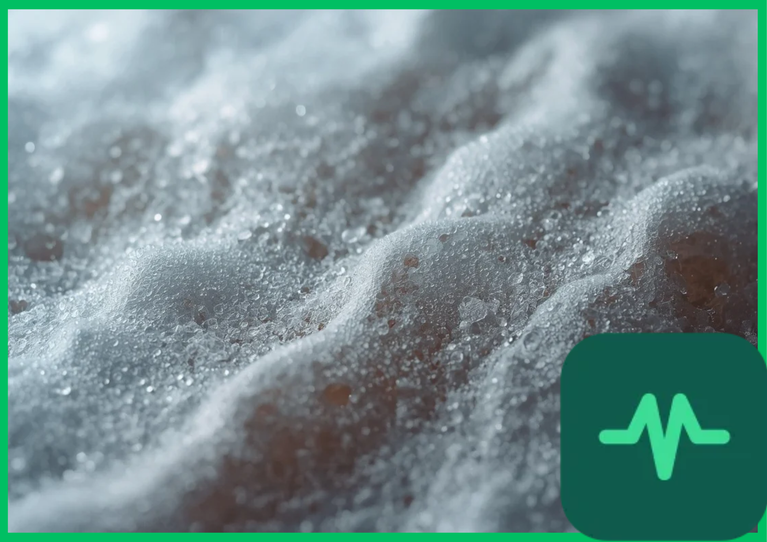
Nanocellulose Aerogel Porous Architecture and Knudsen Diffusion Physics
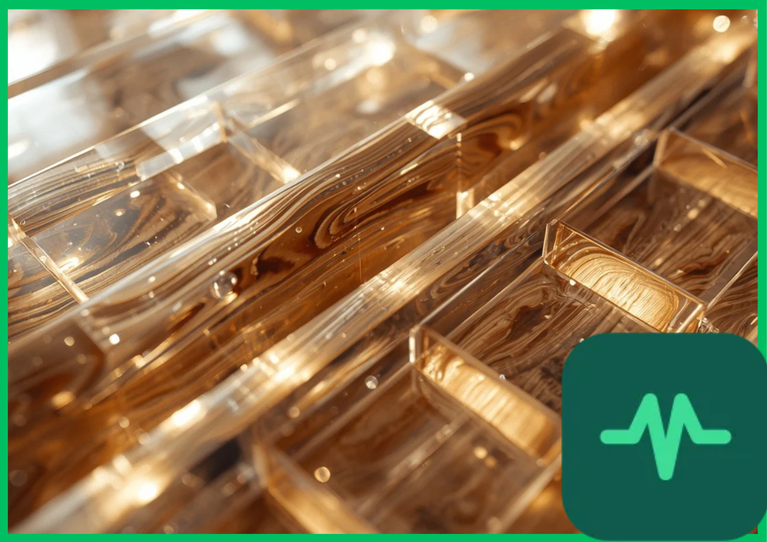
The foundational physical mechanism driving the exceptional thermal insulation performance of bio-based aerogels is their hyper-porous internal architecture. Fabricated primarily from cellulose nanofibrils (CNF), bacterial cellulose (BC), or chitosan extracted from renewable agricultural and forestry residues, these aerogels achieve total volumetric porosities exceeding 95% to 99%.
The solid skeleton forms an intricate, interconnected three-dimensional network of nanoscale fibrils characterized by extremely high specific surface areas ( to
 [
 ]) and ultra-small average pore diameters ranging from
 to
 . This pore size distribution is critical for suppressing gaseous thermal conductivity via the Knudsen effect. Under standard temperature and pressure conditions, the mean free path of air molecules (
 and
 ) is approximately
 . When the average pore diameter of the aerogel matrix drops below this molecular mean free path, gas molecules collide more frequently with the solid cellulose pore walls than with each other. This physical constraint dampens molecular gas phase collisions, effectively suppressing gaseous convection and limiting thermal energy transport through the trapped air pockets.
Heat Transfer Mechanisms and Thermal Conductivity Coefficients
Total thermal conductivity ( ) within porous insulation materials is governed by four simultaneous heat transfer pathways: solid conduction (
 ), gaseous conduction (
 ), radiative heat transfer (
 ), and convective heat transfer (
 ). The governing mathematical formulation expresses total effective thermal conductivity as:


In high-performance nanocellulose aerogels, convective heat transfer ( ) is entirely eliminated because the microscopic pore dimensions prevent fluid circulation and natural buoyancy currents. Gaseous conduction (
 ) is severely restricted by the Knudsen diffusion effect within the nanoporous network. Solid conduction (
 ) remains exceptionally low due to the tortuous, point-contact percolation pathways of thin cellulose nanofibrils (
 to
 in diameter), which impede phonon propagation across the solid matrix.
Optimized bio-based aerogel insulation panels achieve baseline thermal conductivity coefficients ranging from 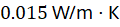 to
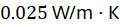 (
 ). This thermal performance outperforms conventional fiberglass batts (
 ) and matches or exceeds commercial silica aerogels, while utilizing abundant, renewable biological precursors.
Chemical Extraction and Cross-Linking Stabilization
Synthesizing robust bio-based aerogels requires precise control over chemical isolation and structural stabilization. Cellulose nanofibrils are extracted from raw plant lignocellulose via mechanical fibrillation combined with chemical pretreatments—such as 2,2,6,6-tetramethylpiperidine-1-oxyl (TEMPO)-mediated oxidation or enzymatic hydrolysis—to introduce negative surface charges ( ) that promote stable aqueous colloidal suspensions.
Dispersion stability is transformed into a solid hydrogel network via chemical cross-linking or physical gelation. Cross-linking agents such as glutaraldehyde, epichlorohydrin, or citric acid react with hydroxyl groups ( ) along the cellulose polymer chains, establishing covalent ester or acetal linkages that reinforce the structural integrity of the gel matrix.
Following gelation, removing the liquid pore solvent without inducing capillary pressure collapse is mandatory for preserving high porosity. Industrial manufacturing protocols employ freeze-drying (lyophilization) under controlled sublimation rates or supercritical carbon dioxide ( ) drying. Supercritical drying eliminates liquid-vapor interfaces entirely, preventing capillary meniscus forces from crushing the delicate nanocellulose skeleton during phase transition.
Technical Data Specifications of Bio-Based Aerogel Parameters
| Physical & Thermal Parameter | Engineering Specification Standard |
|---|---|
| Volumetric Porosity | 95% to 99% open-cell void volume |
Skeletal Bulk Density ( ) |  to  (  ) |
Thermal Conductivity ( ) | 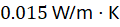 to 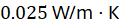 (  ) |
| Average Pore Diameter |  to  (Knudsen diffusion regime) |
| Specific Surface Area (BET) |  to  (  ) |
| Compressive Elastic Modulus |  to  ( 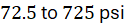 ) |
| Service Temperature Limit |  to  (  to  ) |
Mechanical Integrity, Hydrophobicity, and Fire Retardancy
A primary technical hurdle in deploying nanocellulose aerogels within building envelopes is their inherent moisture sensitivity and mechanical brittleness. Native cellulose is hydrophilic due to an abundance of polar hydroxyl groups, causing unmodified aerogels to absorb atmospheric moisture and undergo structural collapse (swelling and shrinkage hysteresis) upon water condensation.
Engineered bio-based aerogels overcome moisture vulnerability through chemical surface modification. Vapor-phase silanization using methyltrimethoxysilane (MTMS) or hexamethyldisilazane (HMDS) grafts hydrophobic methyl groups ( ) onto the cellulose skeletal surface. This chemical treatment alters the contact angle from hydrophilic to superhydrophobic (
 ), repelling liquid water while maintaining vapor permeability.
Furthermore, untreated nanocellulose is combustible, requiring the integration of inorganic fire-retardant additives. Compounding ammonium polyphosphate, aluminum hydroxide ( ), or titanium dioxide (
 ) nanoparticles into the aqueous cellulose suspension yields composite aerogels that satisfy stringent building fire safety codes, achieving self-extinguishing behavior and limiting peak heat release rates during flammability testing.
Life-Cycle Energy Savings and Building Envelope Integration
Evaluating the commercial deployment of bio-based aerogel insulation requires examining cradle-to-gate life-cycle carbon accounting metrics and operational energy savings. According to IEA and UNEP building decarbonization assessments, upgrading building insulation with high-performance ultra-thin materials reduces space heating and cooling energy consumption by 30% to 50% compared to uninsulated structures.
Because nanocellulose aerogels sequester atmospheric carbon during biomass growth phases, their embodied carbon footprint is significantly lower than petrochemical synthetic foams. Integrating  to
 (
 ) of bio-based aerogel blanket insulation into exterior wall assemblies achieves thermal resistance values (
 -values) equivalent to
 to
 of conventional insulation. This volumetric space-saving maximizes interior usable floor area in urban architectural retrofits while slashing operational building energy loads.
The Final Take
Mastering bio-based aerogel insulation thermal conductivity transforms sustainable building envelope engineering by replacing carbon-intensive synthetic foams with hyper-porous biopolymer materials. Citing IEA energy efficiency reports and academic materials science literature, optimizing nanocellulose pore dimensions below molecular mean free paths suppresses gaseous conduction, achieving superior thermal resistance. Through chemical cross-linking, hydrophobic silanization, and fire-retardant integration, bio-based aerogels establish an essential technical foundation for low-carbon, high-performance architecture.

Comments (0)
Login to leave a comment.
No comments yet. Be the first to share your thoughts!