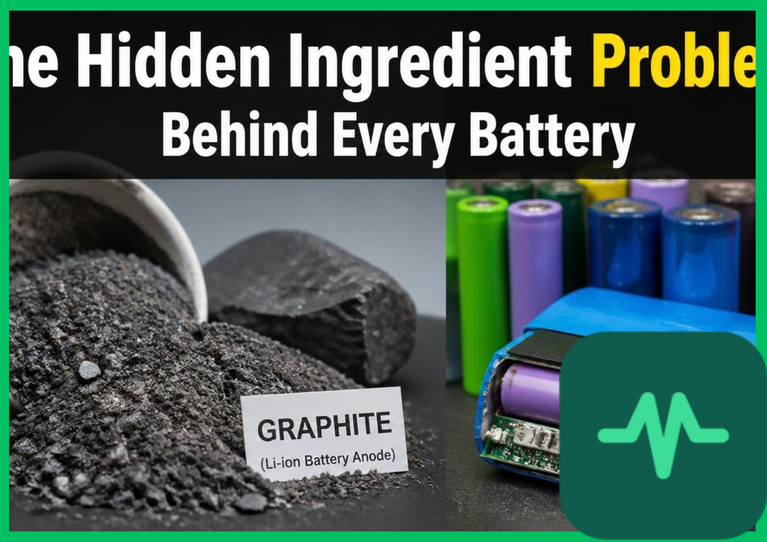
Right now, the world wants far more of these materials than it can easily supply. This quiet problem sits behind almost every clean energy headline you read.
What these materials actually are
A handful of specific minerals make modern batteries possible. Lithium, cobalt, nickel, and several rare earth elements are the main ones people talk about.
These aren't exotic, mysterious substances. They're simply materials that exist in limited places around the world, and mining them takes real time and investment.
Why demand has grown so fast
Electric vehicles need considerably larger batteries than phones or laptops ever did. As more people buy electric cars, demand for these specific materials has climbed sharply.
Add in home batteries, grid-scale storage projects, and other growing technologies, and the total demand picture becomes genuinely enormous compared to just a decade ago.
Why supply hasn't kept pace
Opening a new mine takes years, often a decade or more, from discovery to actual production. This is a slow, expensive process that can't simply speed up just because demand suddenly increases.
This mismatch, fast-growing demand against slow-growing supply, is exactly why experts describe current mineral supply as lagging behind what the world actually needs.
Why this matters beyond just price
When supply falls short of demand, prices tend to rise. This can make batteries, and the products that rely on them, more expensive than they'd otherwise be.
It also raises real questions about where these materials come from, and whether relying too heavily on just a few countries or companies creates risks if something disrupts that supply.
The honest concentration problem
A small number of countries currently control much of the world's supply and processing of these key materials. This concentration creates real vulnerability if political tensions or supply disruptions ever affect those specific regions.
This is why many countries and companies are now investing heavily in finding alternative sources, and in building new processing facilities elsewhere, rather than relying on just a few existing suppliers.
What's being done about this challenge
Mining companies are exploring new deposits in various regions. Some companies are also investing in recycling old batteries specifically to recover these valuable materials instead of relying purely on new mining.
Battery scientists are also working on alternative battery designs that use different materials entirely, some using more abundant, less geographically concentrated resources instead.
Why battery recycling matters so much here
A used battery still contains valuable materials inside it. Recycling that battery properly can recover a meaningful portion of those materials for reuse in new batteries.
This creates a genuinely important alternative source of supply, one that doesn't require digging anything new out of the ground at all. As more batteries reach the end of their life, this recycled supply will keep growing.
Why some newer battery types could help
Not every battery needs the exact same materials. Some newer battery chemistries rely on more common, widely available materials instead of the most constrained ones.
These alternatives often trade off some performance for better material availability. For certain uses, like home energy storage rather than vehicles, this tradeoff makes genuine sense.
What this means for buying an electric vehicle today
You likely won't feel this supply challenge directly when shopping for a car. Manufacturers handle sourcing behind the scenes, and prices reflect broader market conditions rather than a single, obvious shortage.
That said, understanding this challenge helps explain why battery prices haven't fallen as quickly as some once expected, and why manufacturers are investing so heavily in recycling and alternative materials right now.
Why this problem likely improves over time
New mining projects take years, but they are happening. Recycling programs are scaling up steadily. Alternative battery designs are becoming more practical each year.
None of this fixes the problem overnight, but the combined effect of these efforts should gradually ease the pressure over the coming years, much like previous resource challenges have eased through investment and innovation over time.
Why this story deserves more attention
Clean energy technology often gets discussed purely in terms of panels, turbines, and batteries themselves. The raw materials behind them rarely get the same spotlight, despite being just as important to the whole picture.
Understanding this hidden layer helps make sense of pricing, supply news, and why so much investment is quietly flowing into mining, recycling, and material science right now.
The bottom line
Batteries depend on specific materials that are harder to supply quickly than the world's growing demand requires. This creates real challenges around pricing, supply security, and where these materials come from.
Mining expansion, recycling, and new battery designs are all working to close this gap. It's a genuine, ongoing challenge, not yet fully solved, but one the industry is actively working through from multiple directions at once.


Comments (0)
Login to leave a comment.
No comments yet. Be the first to share your thoughts!