Thermodynamic Principles and Carnot Cycle Mechanics
The foundational operational principle of a Carnot battery involves coupling a reverse thermodynamic cycle (heat pump or refrigerator) with a forward thermodynamic cycle (power generation heat engine). During the charging phase (electricity-to-heat conversion), electrical energy drives a compressor that performs work ( ) on a working gas, elevating its temperature and pressure. The thermal energy is extracted via heat exchangers and transferred to a high-temperature thermal storage reservoir operating at absolute temperature
 (ranging from
 to
 [
 to
 ]). Simultaneously, a secondary or paired thermodynamic circuit extracts thermal energy from a low-temperature cold reservoir operating at absolute temperature
 (ranging from
 to
 [
 to
 ]).
The theoretical maximum round-trip efficiency ( ) of an ideal Carnot battery is bounded by the operational temperatures of the hot and cold reservoirs, governed by the Carnot efficiency limits of the constituent heat pump (
 ) and heat engine (
 ):

In real-world engineering implementations, irreversible thermodynamic losses—such as compressor and turbine polytropic inefficiencies, pressure drops across recuperators, and finite temperature differences in heat exchangers—reduce actual practical round-trip efficiencies to between 50% and 70%.
Thermal Storage Media and High-Temperature Reservoirs
Constructing efficient Carnot batteries requires selecting stable, high-capacity thermal storage media for both hot and cold reservoirs. System typologies diverge based on the selected storage materials and working fluids:
- Solid-State Packed Bed Storage: Utilizes refractory ceramic bricks, alumina pebbles, or cast iron slag heated to temperatures between
 and
 (
 to
 ). Packed beds offer high volumetric heat capacity and low material cost, but require precise thermal front management to prevent thermal degradation and structural cracking.
- Molten Salt Thermal Storage: Employs eutectic binary or ternary nitrate salt mixtures (
 -
 ) liquidized at temperatures up to
 (
 ). Molten salts provide excellent convective heat transfer coefficients and stable liquid-phase handling, though freezing point thresholds (
 [
 ]) require continuous tracing heat systems.
- Cryogenic Cold Storage: Utilizes liquid air or liquid nitrogen as a cold sink in pumped thermal electricity storage variants (pumped liquid air energy storage - PLAES), maintaining a low-temperature sink at
 (
 ) to maximize the operational temperature delta (
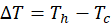 ).
Round-Trip Efficiency (RTE) and Thermodynamic Loss Factors
Evaluating the economic viability of grid-scale LDES systems requires rigorous auditing of round-trip efficiency (RTE), which quantifies the ratio of electrical energy delivered during discharge ( ) relative to electrical energy consumed during charging (
 ):
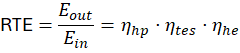
where  represents the charging coefficient of performance,
 accounts for thermal storage insulation standby losses, and
 denotes the discharging heat engine efficiency.
Compressor and expander (turbine) aerodynamic losses constitute the primary parasitic drain on system RTE. Polytropic efficiencies ( ) of high-speed centrifugal compressors and radial inflow turbines typically range from 85% to 92%. Any deviation from isentropic expansion or compression introduces entropy generation and exergy destruction. Furthermore, heat exchanger effectiveness (
 ) must exceed 95% to recover internal thermal energy via gas-to-gas recuperators, minimizing external thermal leakage and preserving high system-level round-trip efficiency.
Technical Data Specifications of Carnot Battery Parameters
| Thermodynamic & Storage Parameter | Engineering Specification Standard |
|---|---|
| Hot Reservoir Operating Temperature |  to  (  to  ) |
| Cold Reservoir Operating Temperature |  to  (  to  ) |
| System Round-Trip Efficiency (RTE) | 50% to 70% practical electrical conversion yield |
| Compressor / Expander Polytropic Eff. | 85% to 92% aerodynamic efficiency ( ) |
| Thermal Storage Standby Heat Loss |  total stored thermal energy per 24 hours |
| Discharge Duration Capability |  to  multi-hour LDES window |
| Storage Media Volumetric Capacity | 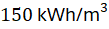 to 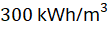 sensible heat density |
Grid-Scale LDES Integration and Capital Cost Economics
Carnot batteries provide distinct economic and geographic advantages over conventional pumped hydroelectric storage (PHS) and lithium-ion battery energy storage systems (BESS). Pumped hydroelectric storage requires specific mountainous topography and massive water resource rights, limiting site selection. Lithium-ion battery installations face escalating capital expenditures when scaled to multi-day discharge durations (exceeding 10 to 24 hours) due to the linear cost scaling of battery cells.
Conversely, pumped thermal electricity storage decouples power capacity (determined by compressor and turbine generator ratings) from energy storage capacity (determined by the physical volume of thermal storage media and insulated reservoirs). This decoupled architecture allows Carnot batteries to scale storage duration cost-effectively to 24, 48, or 100 hours by simply expanding low-cost thermal storage materials like ceramic brick or stone aggregates. Capital expenditures ( ) per kilowatt-hour (
 ) drop significantly at long discharge durations, positioning Carnot batteries as an economically attractive long-duration energy storage solution for decarbonized power grids.
The Final Take
Mastering pumped thermal electricity storage efficiency metrics advances grid-scale energy storage engineering by replacing electro-chemical batteries with high-temperature thermodynamic cycles. Citing IEA long-duration energy storage assessments and academic thermodynamic literature, Carnot batteries leverage reverse and forward thermodynamic cycles to store excess electricity as sensible heat and cold. By optimizing compressor polytropic efficiencies, heat exchanger effectiveness, and thermal storage media selection, pumped thermal electricity storage systems deliver an essential technical foundation for multi-day grid decarbonization.




Comments (0)
Login to leave a comment.
No comments yet. Be the first to share your thoughts!