
Renewable Energy Integration Economics and Residual Load Ramping
The economic integration of high shares of variable renewable energy alters traditional wholesale electricity price dynamics. As zero-marginal-cost wind and solar generation enters the grid, mid-day wholesale spot prices frequently collapse toward zero or enter negative pricing intervals during periods of overgeneration. Conversely, when solar generation drops precipitously during evening peak demand hours, thermal and flexible assets must ramp up rapidly to meet residual load demand.
This sharp operational shift creates the well-documented "duck curve" phenomenon, characterized by steep net load ramping rates exceeding several gigawatts within a one-hour window. Power system flexibility economics quantify the ability of a power grid to deploy rapid adjustments in generation or consumption in response to rapid net load fluctuations. Without explicit pricing mechanisms for flexibility, wholesale market revenues become insufficient to sustain the capital-intensive flexible assets—such as open-cycle gas turbines, pumped-storage hydroelectricity, and grid-scale battery energy storage systems (BESS)—needed to stabilize the grid during renewable deficit periods.
Capacity Remuneration Mechanisms (CRMs) and Resource Adequacy
To prevent market failures and ensure long-term resource adequacy, regulatory authorities implement capacity remuneration mechanisms (CRMs) that separate electrical energy compensation from capacity availability payments. Capacity markets operate as forward auctions where power plant owners, energy storage developers, and demand-response aggregators bid to provide firm capacity several years in advance of actual grid operation.
Capacity remuneration mechanisms protect system reliability by compensating assets for maintaining readiness to generate electricity or reduce demand during system stress events, regardless of whether the asset runs continuously. Market designs utilize diverse structural frameworks:
- Centralized Forward Capacity Auctions: System operators determine total multi-year capacity requirements based on probabilistic loss-of-load expectation (LOLE) metrics (such as a standard 1-day-in-10-years reliability criterion) and clear market-clearing prices.
- Reliability Options: Financial contracts where capacity providers receive a guaranteed capacity payment in exchange for refunding price spikes when wholesale spot prices exceed a predetermined strike price, protecting consumers from excessive market volatility.
- Strategic Reserves: Procuring and holding specific backup generation assets outside the commercial energy market to deploy exclusively during emergency capacity shortfalls.
Ancillary Service Markets and Short-Term Flexibility Pricing
While capacity markets address long-term resource adequacy, ancillary service markets govern short-term system flexibility pricing and real-time grid stabilization. Operating frequency must be maintained within tight tolerances (typically 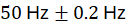 or
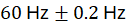 ) to prevent cascading equipment damage and widespread blackouts.
Short-term ancillary service markets allocate remuneration across specialized operating reserves:
- Primary Frequency Response (Regulation Up/Down): Automated governor or inverter responses dispatched within milliseconds to seconds to arrest rapid frequency deviations caused by sudden generation trips or load imbalances.
- Spinning and Non-Spinning Reserves: Fast-starting combustion turbines or synchronized battery blocks capable of ramping to full output within 10 to 30 minutes to replace lost generation capacity.
- Reactive Power and Voltage Control: Managing local reactive power injection (
 ) to regulate transmission line voltage profiles and prevent voltage collapse across high-voltage AC networks.
Deploying fast-responding lithium-ion or vanadium redox flow battery energy storage systems into ancillary service markets captures high clearing prices for frequency regulation, improving the economic viability of energy storage deployment alongside variable renewables.
Technical Data Specifications of Grid Flexibility Parameters
| Grid Flexibility & Capacity Parameter | Engineering Specification Standard |
|---|---|
| System Frequency Tolerance Limits |  nominal operating band ( 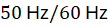 ) |
| Primary Frequency Response Latency |  seconds automated inverter/governor injection |
| Spinning Reserve Deployment Window | 10 minutes to 30 minutes full power ramp time |
| Resource Adequacy Reliability Target | Loss of Load Expectation ( )  days/year |
| BESS Response Time (Ancillary Service) |  full four-quadrant power swing |
| Residual Load Ramping Gradient | Up to  per hour net load change |
| Capacity Market Forward Procurement | 3 to 4 years ahead of delivery obligation year |
Locational Marginal Pricing and Demand Response Integration
Optimizing transmission congestion and regional flexibility requires implementing nodal locational marginal pricing (LMP). Locational marginal pricing calculates wholesale electricity prices at specific nodes across transmission networks by accounting for three distinct cost components: energy cost, transmission congestion cost, and electrical line loss cost.
High congestion costs signal transmission bottlenecks where local generation or demand response is urgently required. Rather than constructing expensive high-voltage transmission lines, modern grid management systems integrate automated demand response (ADR) programs. Industrial manufacturing loads, commercial HVAC systems, and residential electric vehicle smart-charging fleets respond dynamically to real-time LMP price signals, curtailing consumption or discharging stored energy during high-price intervals. This demand-side flexibility flattens peak load profiles and reduces the total volume of fossil-fuel peaking capacity required to maintain grid stability.
The Final Take
Mastering clean energy grid flexibility capacity markets establishes the vital economic foundation required to operate high-renewables power systems reliably. Citing IEA power system integration assessments and electrical grid economics literature, deploying capacity remuneration mechanisms, fast-responding ancillary service markets, and locational marginal pricing ensures adequate remuneration for flexible assets. By aligning market design with the thermodynamic realities of variable renewable generation, power systems maintain absolute grid stability and resource adequacy.



Comments (0)
Login to leave a comment.
No comments yet. Be the first to share your thoughts!